

Hunterdon Oral and Maxillofacial Surgical Specialists
Traveling and Oral Health: Tooth Tips for the Holidays
We don’t have to tell you: the winter holidays mark one of the busiest seasons of the year. With shopping, parties and vacations jam-packed on the calendar, it’s no wonder that many people take shortcuts when it comes to oral health maintenance during this time. If you are traveling during the holiday season and you want to avoid a January surprise cavity (or worse), here are some simple tooth travel tips to help you keep your smile intact.
 Don’t leave home with a toothache! If you suspect you have any lurking problems in your mouth, schedule an appointment prior to your travel date so that you don’t end up with a tooth emergency while out of town. Research emergency dental clinics in your destination city and have those numbers handy to ensure that your time off is as relaxing as possible.
- No one ever regrets buying travel-sized gear. Keeping a travel toothbrush, floss and toothpaste on hand in addition to trial sizes of your favorite toiletries reduces your packing time, and not just during the holidays.
- Splurge on probiotics! Diseases and germs run rampant in buses, airports and other communal places that you might encounter during your trip. Researchers believe that probiotics are not only good for the gut; they may help maintain optimal oral health too!
- Toothbrushes don’t last forever! Generally, dentists recommend that you buy a new toothbrush every two to three months when at home. However if you are traveling, your toothbrush is exposed to even more bacteria. It’s best to toss it when you return home and swap it for a fresh brush, even if it hasn’t hit the three-month mark yet.
- Chewing gum is a limitless oral-health-on-the-go tip! Bringing sugar-free gum with you has multiple benefits; not only does it taste good and make your breath smell fresh, but the gum can help remove food that may be stuck in your teeth as well, acting as a secondary toothbrush.

Dental Implants: What Should I Believe?
Dental Implants have become commonplace, with over 3 million people worldwide hosting some sort of implant. Unfortunately, their rising popularity has been accompanied by an increasing number of misconceptions about what they can and can’t do.
 Let us help you to understand which of these common messages are true and which are fabricated.
Message #1: Dental implants are more expensive than traditional restorative methods.
Verdict: True and False. While the initial implant installation is more costly than other dental restorative procedures, over time, maintaining dental implants is much easier and cheaper. Other procedures require eventual replacement. For example, dentures require replacement after 5-10 years while dental bridges must be replaced every 7-10 years. So in the long run, dental implants can be less expensive than these alternative procedures.
Message #2: Dental implants are exceedingly painful.
Verdict: False. Like most forms of oral surgery, dental implant installation does involve some discomfort. However, patient accounts reveal that the pain is not worse than any typical tooth extraction as doctors use local anesthesia to address and minimize any discomfort during the procedure.
Message #3: Dental implant placement often fails.
Verdict: False. While dental implants do have the possibility of falling out, it is very rare for this to happen. In fact, reports show that 98% of dental implant surgeries are successful.
Message #4: Only young people should get dental implants.
Verdict: False. There is no reason healthy, elderly patients cannot receive implants. In fact, there are many cases of patients 90 and older undergoing dental implant placement surgery with great success!
Don’t let these common misconceptions get in the way of your decision to get dental implants. Give us a call…we’d be happy to discuss your concerns about dental implants with you to give you a better idea of what this procedure can do for you.
Sedation Dentistry: Could it be Right for You?
Have you ever felt anxious before a dental appointment? Well, you’re not alone. Dental surgery, while very common and safe, is usually not something people look forward to. Thankfully, we have a solution to this common scenario. With sedation dentistry, we can literally calm your nerves and send you off with a bright and grateful smile when you leave our office.
 What is Sedation Dentistry?
Sedation dentistry is the administration of drugs called sedatives that are used to calm patients before and during a dental procedure. These drugs directly affect the central nervous system, depressing the areas related to awareness.
These sedatives can be administered in different ways. One option is inhalation: patients inhale a combination of oxygen and nitrous oxide (also known as “laughing gas”), a mixture that provides an adequate level of sedation for the patient. Another method is oral administration: the patient swallows pills or fluids to ensure an anesthetic and calming effect. And finally, sedatives can be taken intravenously with the medication being injected directly into the bloodstream via needle.
Why should I consider Sedation Dentistry?
The main benefit of taking sedatives is to eliminate anxiety during a procedure. You will be relaxed, comfortable and more accepting of the procedure.
Advantages of sedation dentistry include:
- Movement: As sedation depresses the nervous system, you will be less prone to moving and reacting to the procedure with potentially damaging motions.
- Cooperation: Children or patients with mental disabilities may have a hard time sitting still during a visit. Sedation dentistry allows them to relax and thus cooperate more readily.
- Time: Longer appointments are sometimes harder for patients to sit through. Fortunately, sedation dentistry ensures that you will be more comfortable and less exhausted, simplifying the appointment even during a long procedure.
Contact us to find out how we can make your next appointment worry-free with sedation dentistry!
Dental Implants: Are they right for you?
Not everyone is blessed with perfect teeth. Many people would tell you they lack the smile they’ve always wanted due to genetics, disease, and sometimes even accidents. Fortunately, we have a solution. With dental implants, you will no longer feel self-conscious about your smile; but rather delight in having a new and improved grin!
 What are dental implants?
Technically, dental implants are replacement roots for missing teeth. First, the implant, a titanium screw, is inserted into the jawbone. Next, a removable or permanent replacement tooth is attached to the top of the implant to mirror the appearance of your natural teeth. Currently, over 3 million people worldwide have dental implants and the technology has reached a point where each procedure has a 98% success rate.
Why should I get dental implants?
Beyond simply improving the appearance of your smile, dental implants include many other benefits:
- Oral health: Unlike other restorative procedures, dental implants do not necessitate the reduction or alteration of neighboring teeth, thus resulting in improved oral health overall. Additionally, dental implants do not interfere with access to neighboring teeth, so it is no harder to brush or floss.
- Longevity: While other dental aides such as dentures and bridges inevitably require replacement, dental implants are extremely durable, lasting many more years and in some cases even a lifetime!
- Convenience: Dental implants do not ever need to be removed for activities such as eating, drinking and brushing, and do not require adhesives. They act, look and feel just like natural teeth!
How much do dental implants cost?
Dental insurance does not always cover the cost of dental implants. However, in the long run, dental implants are usually cheaper than other restorative procedures. Because they do not need to be replaced, the initial investment for implants is well worth the price.
Dental implants are becoming a popular trend in the world! Call us to set up an appointment to upgrade your smile!
Wisdom Teeth: What do I Really Need to Know?
For the majority of people, the removal of their wisdom teeth is just another part of growing up. However, that doesn’t mean it’s an easy part! A combination of frightening stories from friends and false rumors online have may have you feeling anxious about your upcoming procedure. So we’d like to set the record straight and put your mind at ease.
 Here is what you really need to know about wisdom teeth:
1. If you ignore them, there will be more (pain, that is).
Despite their name, it is not a smart idea to refuse surgery and live with your wisdom teeth. Most wisdom teeth are asymmetrical (they don’t grow evenly) which can cause complications. Asymmetric wisdom teeth have a high chance of developing gum disease and infections, which can become life threatening if not treated.
2. Patience is not a virtue.
As wisdom teeth generally form roots during the teenage years, it is better to have them removed during that time. Waiting until you are 30 or 40 can increase the chance of them rupturing a nerve, leading to a longer and more complicated recovery.
3. I scream for ice cream!
We recommend that you only ingest liquids for a day after the procedure. Ice cream, pudding and smoothies are all great choices (without straws). Softer foods are advised for the rest of the week, so make sure to stock up on pasta, eggs and mashed potatoes! And remember: NO straws during your recovery period.
4. No pain, plenty to gain.
Thanks to anesthesia and/or laughing gas, your wisdom tooth extraction will be painless. However, most of our patients do experience some sort of discomfort in the days following the surgery, so we will suggest methods and medications to help with that while you are in our office.
5. Rest is the best!
Post-removal recovery depends on the patient, but most people do not resume work for four-to-five days. Patients are also advised to not exercise vigorously or play any sort of wind instrument for a week.
Dental Implants: Five Things You May Not Know
How much do you know about dental implants? With the increasing popularity and availability of dental implant surgery worldwide, patients are gaining more and more knowledge about dental implants every day.
 But did you know these five important facts?
- Dental implants are appropriate for almost all ages. Not just for the elderly, dental implants are frequently placed even in the mouths of young adults. As long as the jaw has stopped growing (after puberty; age 16 for girls and age 18 for boys), a dental implant can be placed with great success.
- The titanium post actually fuses (osseointegrates) with the natural jawbone. They grow together to form a stronger foundation for replacement teeth. So dental implants actually improve the bone structure in the jaw, they don’t just fill it in.
- The “dental implant” is actually just the titanium post, one of three parts of the whole process. Other parts used in the full procedure that we think of as “dental implant surgery” are known as the abutment (the connector) and the actual replacement tooth itself (the crown).
- Dental implants preserve jawbone, whereas other teeth replacement options can lead to bone deterioration. Bone is similar to muscle in that it must be used in order to maintain its mass. When a tooth goes missing and the site is left untreated, the jawbone underneath tends to deteriorate. Dental implants eliminate this problem by securing a natural-like tooth right into the jawbone and thus utilizing (and preserving) that area of bone.
- Dental implants protect their neighbors. By contrast, a traditional, tooth-supported bridge involves the grinding away of the teeth on either side to act as a hammock for the bridge. With dental implants, the jaw is the anchor and support for the artificial tooth.
The bottom line? Dental implants offer a safe and manageable alternative to traditional tooth replacement methods.
Wisdom Teeth: What’s the Big Deal?
Especially with the younger crowd, this is a question we get time and time again in our office! And understandably so! To some, removing the wisdom teeth seems like it should be an elective procedure, not a necessary one. 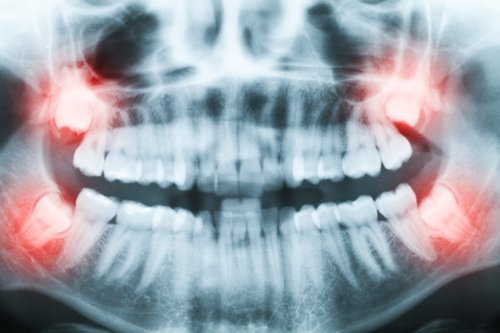
You have probably heard the statistic that 85% of people have to have their wisdom teeth (also called “third molars”) extracted at some point during their life. But you may be wondering “Why?” (As in “Why fix it if it isn’t broken?”)
Well, as it turns out, naming these teeth “wise” demonstrates a very questionable use of vocabulary. “Wisdom” teeth actually turn out to be more like “trouble makers” for most people, and the common removal of them during the young adult years is done as a necessary preventative measure to avoid much bigger problems down the road.
What kind of problems are we preventing?
One of the problems wisdom teeth present is that often there is no place for them to grow. The average mouth is designed to accommodate 28 permanent teeth, not 32. What ends up happening is that the third molars start to grow horizontally, inward or outward or even into the jaw bone, eventually crowding the nerves and causing pain.
In the case of impacted teeth, they may be “stuck” in the jawbone, only able to partially erupt through the gums. This can create an inlet for bacteria with the potential to cause serious infection inside the mouth and jaw area. Furthermore, brushing and flossing becomes a problem, which leads to more problems with decay and infection.
Still not convinced as to why we would perform the procedure now instead of just waiting to see if you develop problems later in life? Great question! As it turns out, we have a very good reason for that as well: In a teen or young adult, the removal of wisdom teeth is much easier to perform with less pain and complications simply because the roots have not fully formed yet. Once those roots set in the surgery becomes more complicated.
We understand your hesitations about wisdom teeth removal, and we’d be happy to answer any other questions you have about your wisdom teeth, give us a call today!
Can My Dental Implants Get Cavities? And Other Common Questions…
In my practice, I hear dozens of questions every day about dental implants from concerned (or simply cur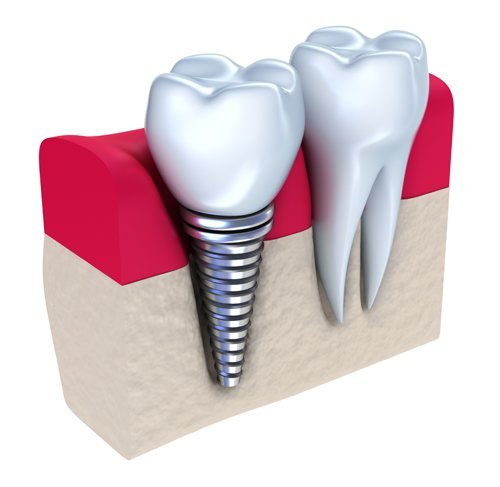 ious) patients. Every one of those questions is a good question and I always try to provide an equally good answer. To help you better understand an upcoming dental implant procedure, we’ve compiled a top-five list of the most common questions about dental implants that we field in our office every day:
1. Can dental implants get cavities?
No. Because the implant-restored crown is an artificial (not natural) material, it cannot grow cavities, phew! However, you still need to have regular gum care and cleanings around the implant site just like you would for a natural tooth.
2. Can implants slip or fall out like dentures?
No. The artificial tooth (crown) is attached to the permanent titanium post that is set in the jaw. They will not slip around or fall out like you may have experienced with dentures.
3. Can I sleep with my dental implants in?
Yes! They are practically “permanent”, unlike dentures. You do not need to remove and soak them overnight.
4. Aren’t dental implants more expensive than bridges and dentures?
It depends. If you are talking about just a few teeth, implants may be cheaper over time than bridges because they last longer. However, if you need a whole row of teeth replaced, dentures may be a less expensive option for you. Each case is unique, however, so be sure to call us for a proper consultation. We are here to help you understand your costs and benefits so that you can make an informed decision.
5. How long will my dental implants last?
If implanted and cared for properly, dental implants can last for many decades or possibly even a lifetime. Some implants have been in patients for over forty years!
Don’t see your question on our list? Contact us today for quick answers!
What is Inhalation Anesthesia?
Inhalation Anesthesia is a type of sedative medication used for short oral surgery procedures, such as baby tooth removal, suturing of lacerations and the biopsy of oral lesions. Unlike other sedatives, Inhalation Anesthesia is completely painless, as it does not require injections as a means of administration.
What happens when Inhalation Anesthesia are applied?
Inhalation Anesthetics are administered through an anesthesia machine, which mixes oxygen, anesthetics and air and delivers it to the patient. Like general forms of anesthesia, a patient who has had inhalation anesthesia will fall unconscious and not register pain signals during any surgical procedures. Meanwhile, the patient’s vital signs will be continuously monitored, by Dr. Olawoye and his trained staff, using BP monitoring, Oxygen saturation measurement, EKG, Sedation Stethoscope (with Blue tooth technology) and capnography.
Why should I choose Inhalation Anesthesia?
The benefits of Inhalation Anesthesia are especially important for children, who are often afraid of needles. Inhalation Anesthesia avoids the negative stigma of painful injections, ensuring that the surgical procedure is completed and your child has no recollection of the event.
Inhalation Anesthesia’s painless administration makes minor surgeries much easier for you and your kids. Dr. Olawoye is the only oral surgeon in the local area who offers Inhalation Anesthesia. He is one of the leaders in maxillofacial reconstruction and dental implantology and was chosen as New Jersey’s top dentist for 2014. Schedule a consultation and/or appointment today by calling (908) 788-6475.
Dental Implants: Changing the Way We Treat Missing Teeth
 Dental implants are rapidly becoming the standard of care in how we, as dental professionals, deal with missing teeth. And while the incidents of adults losing permanent teeth has been declining for decades, there is still a good chance that at some point in your life you too will require treatment for a lost permanent tooth.
The way this was treated in the past was by one of two methods. The first method was to install a bridge. The second commonly used method was dentures. But both of those methods present their own challenges and hassles to patients. Thankfully, dental implants have improved so much over the years that more often than not they are a better choice for a patient’s oral care plan.
Here are our top five reasons that dental implants have a leg up on their old competitors.
- Almost Natural: Dental implants are so sturdy that they feel and function just like a natural tooth. This is achieved by inserting a screw into the jaw which is allowed to bond with the bone in that area.
- Longevity: Dentures are a long term solution and have the ability to last a lifetime when properly placed and taken care of. By contrast, traditional bridges last only about 5-7 years.
- Fully Functional: Unlike dentures, which have a tendency to slip or feel uncomfortable and might even cause worry about possible embarrassments in public, dental implants don’t move when you are eating, talking or moving around.
- Face Shape Protection: When a permanent tooth is lost, over time the face and smile can sag. Dental implants fill in those spaces and allow you to keep your natural face shape longer!
- Keeps your Jaw in Shape! Dental implants actually stimulate natural bone growth when set in the jaw. Without them, the jaw gets lazy and can deteriorate.
If you have a site in your mouth where you are missing a tooth and have been wondering what to do about it, give us a call today for a consultation to see just how great dental implants can be!